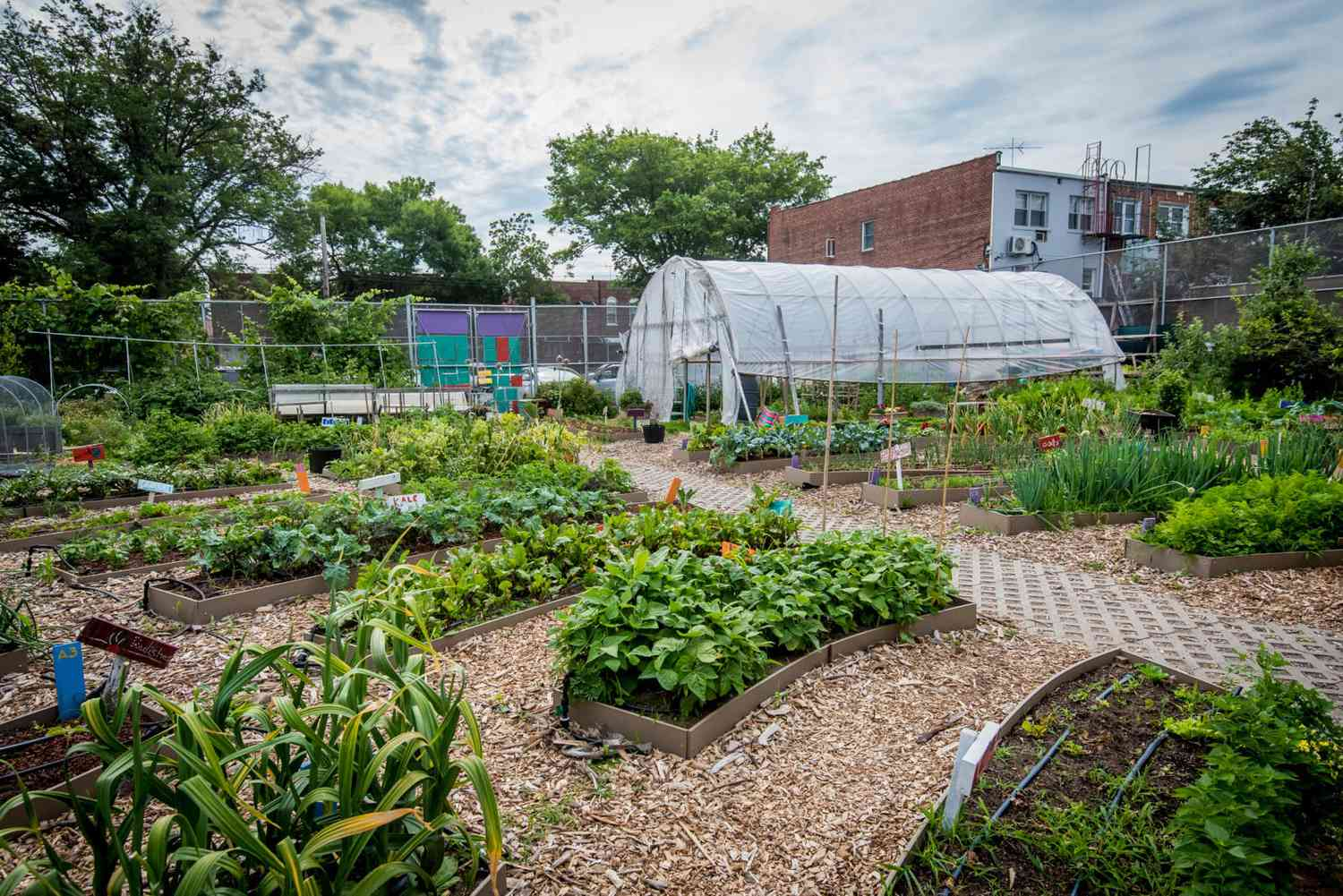
If you have never spent time at a community garden, the assumption is that it's a gardening club. Some raised beds, a few keen retirees, a shed with a whipper snipper in it. That description isn't wrong, exactly. It's just about a tenth of what's going on.
What I actually found was closer to unfunded social infrastructure. A place where an isolated person has a standing reason to leave the house on a Wednesday. Where someone new to town meets their first ten locals. Where a kid who doesn't play sport still has somewhere to belong. Where surplus produce quietly goes to people doing it tough, without a means test or a form.
And it runs on almost no money.
This article is my own account and analysis. I've deliberately not published quotes or attributed positions to the volunteers I spoke with — their words are theirs to give, not mine to publish.
If you're part of a community garden group and you'd like your own perspective published here in your own words, I'd be glad to. Get in touch.
01 / What they actually deliverFive outcomes, none of them vegetables.
Figure 01 · The real output
What a community garden produces besides food.
Structured social contact
For people living alone — particularly older residents and new arrivals — a regular working bee is one of very few reliable, low-pressure reasons to be around other people. It is loneliness intervention that doesn't call itself that.
Practical food relief
Surplus produce moves to neighbours, neighbourhood houses and food relief programs with no eligibility test, no queue and no stigma. Small volumes, but genuinely useful and delivered with dignity.
Skills transfer
Composting, propagation, water-wise growing, seed saving, basic tool use and food preservation — passed between generations informally, at no cost, without a course fee or an enrolment form.
Measurable mental-health benefit
Physical activity, purpose, daylight and belonging, all in one activity. It's the kind of low-cost preventative health outcome that health departments say they want and then struggle to fund at this scale.
Local environmental work
Diverting green waste from landfill, building soil, supporting pollinators, and demonstrating water-wise growing in a hot, dry climate — at a scale residents can actually copy at home.
Volunteer infrastructure
Gardens quietly train people in committee work, rostering, risk management and grant writing. They are one of the last places ordinary residents learn how to run a small organisation.
If you costed what a community garden delivers in loneliness reduction, preventative health and waste diversion, then compared it to what it receives, you would conclude that somebody had made an accounting error. — David Greenwood OAM
02 / The moneyWhat's theoretically available.
On paper, there is a lot of funding for community groups in Victoria. Council small grants. State programs across health, environment and communities. Federal volunteer grants and community programs administered through MPs. Bank and philanthropic funds — Community Bank grants, community foundations, rural and regional funders.
A garden group reading that list would reasonably conclude they're spoiled for choice. In practice, most of those doors are either closed or expensive to walk through, for reasons that have nothing to do with the merit of the work.
Figure 02 · The funding matrix
What a small garden group can and can't realistically access.
Council community & small grants
Usually the most accessible source, with modest amounts and locally understood processes. Generally project-based, competitive, and annual. Often requires incorporation or an auspice arrangement.
Capital grants for infrastructure
Sheds, water tanks, raised beds, fencing, shade structures. This is the category grant programs like best — it produces a photograph and a ribbon. Often requires secure land tenure and co-contribution.
Federal volunteer & community programs
Volunteer Grants and similar programs delivered through federal electorates. Real money for equipment and volunteer costs — but tightly scoped, competitive, and dependent on knowing the round is open.
State health, environment & community programs
Substantial funding exists, but rounds are typically designed for incorporated organisations with reporting capacity, defined outcome measures and sometimes an evaluation framework. A ten-person volunteer committee is not the intended applicant.
Philanthropic & community foundation funding
Community foundations and rural funders do genuinely good work here. But many philanthropic funders can only distribute to organisations with deductible gift recipient status — which most small garden groups do not have and cannot easily get.
Ongoing operational costs
Water bills. Public liability insurance. Replacement tools. Compost. Someone to coordinate the roster. This is the money that keeps a garden alive, and almost nothing funds it.
Paid coordination
Even four hours a week of paid coordination transforms a volunteer group's capacity. It is close to unfundable through standard grant programs, which treat wages as ineligible "administration".
Tax-deductible public donations
Without DGR status a group can't offer donors a tax deduction, which rules out most serious individual giving and much corporate giving. Obtaining DGR status is a significant legal and administrative undertaking.
This is a general description of the funding landscape as it typically applies to small unincorporated or newly incorporated community groups. Individual programs vary and eligibility changes — always check the specific guidelines for any round.
03 / The seven real barriersWhy good groups miss out.
None of these barriers exist because anyone wants to block community gardens. They exist because grant systems are designed around medium-sized incorporated organisations, and then applied to groups a fraction of that size.
Figure 03 · Structural barriers
The obstacles, in the order groups hit them.
| Barrier | What it means in practice |
|---|---|
| Incorporation | Many grants require an incorporated association with an ABN, a constitution, office bearers and audited or reviewed accounts. That's a real governance burden for a group of ten volunteers. |
| Public liability insurance | Often the single largest recurring cost, and required before you can operate on public land at all. It's a bill that arrives every year and is funded by almost nothing. |
| Land tenure | Capital grants frequently require secure tenure — a formal lease or licence of several years. Many gardens operate on an informal or short-term arrangement, which locks them out of exactly the infrastructure funding they need. |
| DGR status | Without it, no tax-deductible donations and limited access to philanthropic trusts. Getting it is a legal process most volunteer committees can't navigate unaided. |
| Grant-writing capacity | Volunteers writing applications after work are competing against organisations with paid grant writers. Same round, same word count, wildly different resources. |
| Acquittal burden | The reporting required to close out a small grant can consume more volunteer hours than the grant was worth. Some groups rationally stop applying. |
| Timing mismatch | Grant rounds run on financial years. Gardens run on seasons. Funding that lands in September for a project that needed to be in the ground in August is functionally useless. |
What we tend to assume
Groups that miss out on funding didn't apply, or didn't apply well.
What's usually true
They were ineligible on a structural criterion before merit was ever assessed.
04 / What would actually helpSix practical fixes.
Some of these are council decisions. Some are state. All of them are cheaper than the programs they'd make work properly.
Figure 04 · Practical proposals
Fixes that don't require new money, or much of it.
05 / Beyond LaraThis is a whole-municipality issue.
Lara isn't unusual. Across Greater Geelong there are community gardens and garden-adjacent groups attached to neighbourhood houses, schools, churches, retirement villages and estates — in Norlane, Corio, Whittington, Newcomb, the Bellarine townships and the Armstrong Creek estates.
They almost never talk to each other. Which means the same problems get solved from scratch eleven times over — the same insurance quotes chased, the same licence negotiated, the same grant application written badly and then written well two years later by a different group who could have just been handed the first one.
A network across the municipality — even something as unambitious as a shared contact list and two meetings a year — would let the group that already solved the tenure problem tell the group currently stuck on it.
06 / Why I care about thisIt's the same argument.
I've spent fifteen years running a volunteer-heavy organisation. CentreStage works because several hundred people give their time, and it survived because at various points we managed to solve exactly these problems: insurance, tenure, governance, grant capacity, the difference between funding a project and funding an organisation.
So when I look at a community garden struggling with public liability cover and a short-term land arrangement, I'm not looking at a gardening problem. I'm looking at the same structural problem that limits every small volunteer organisation in this region — and one that council is unusually well placed to fix cheaply.
Community groups don't need to be rescued. Most of them need three things: secure tenure, insurance they can afford, and reporting proportionate to the money involved. Give them that and they'll do the rest themselves, as they always have.
Are you part of a community garden anywhere in Greater Geelong? I'm trying to build an accurate picture of how many there are, what they're each stuck on, and which problems keep recurring. If you'd like to be on a shared contact list — or you'd like your own account published here in your own words — email david@centrestage.org.au with "Gardens" in the subject.