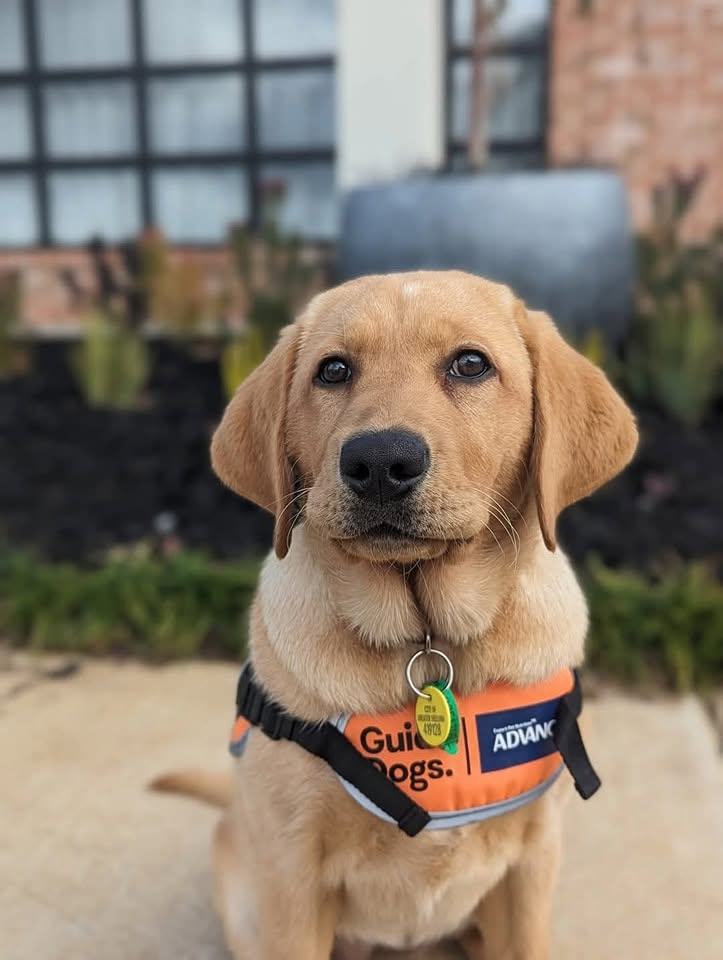
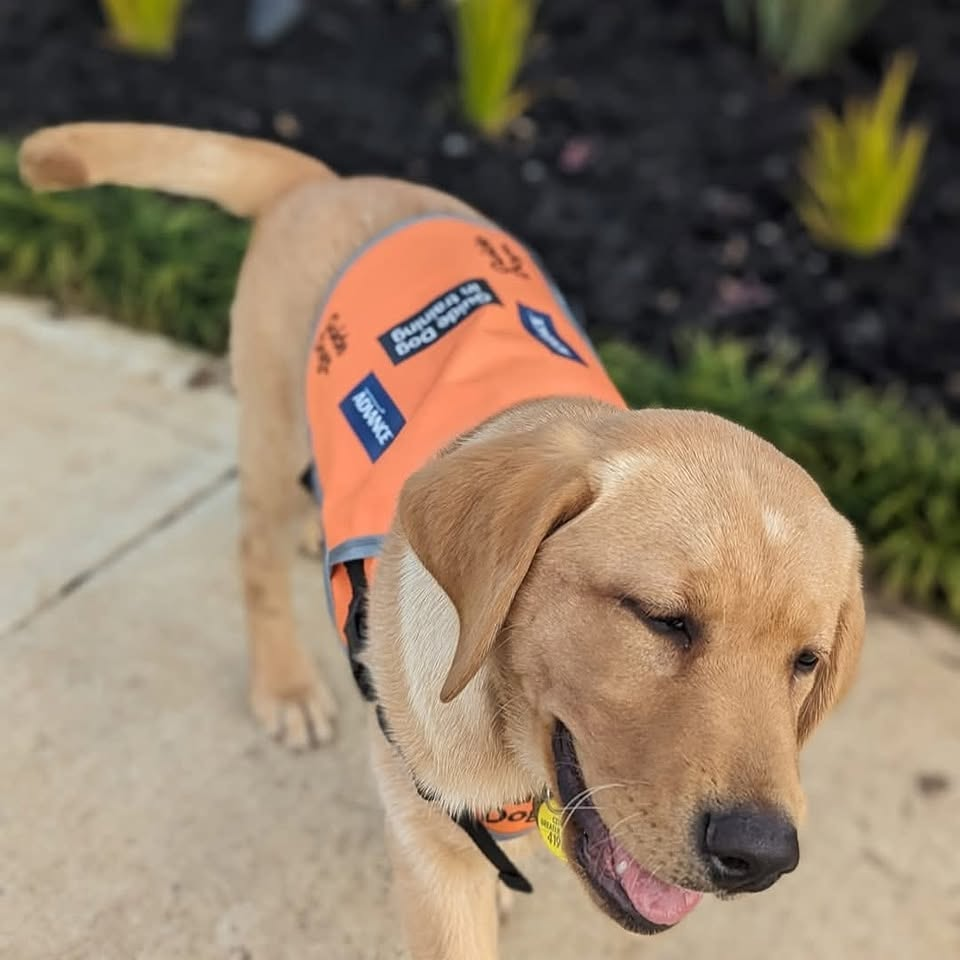
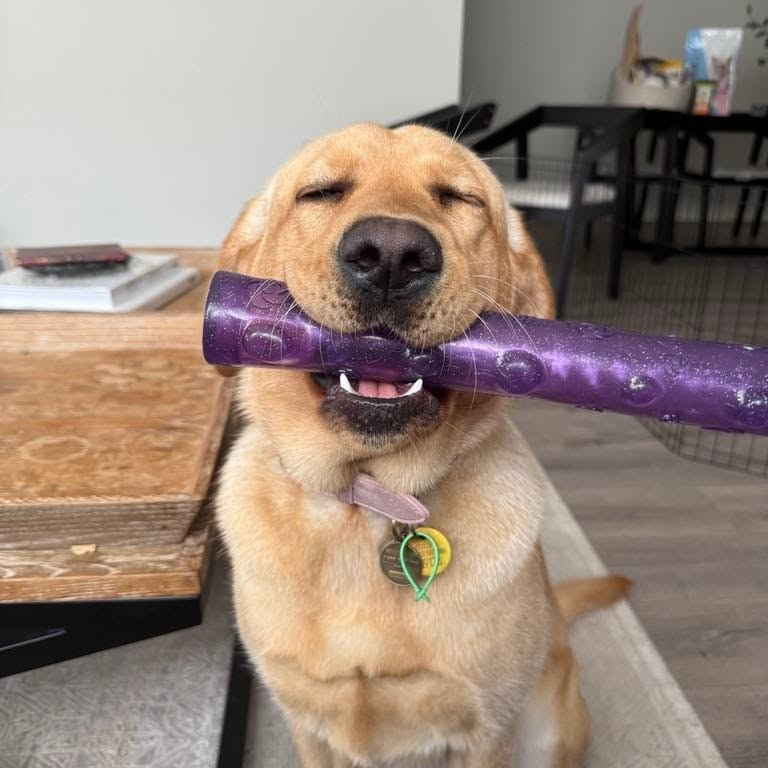
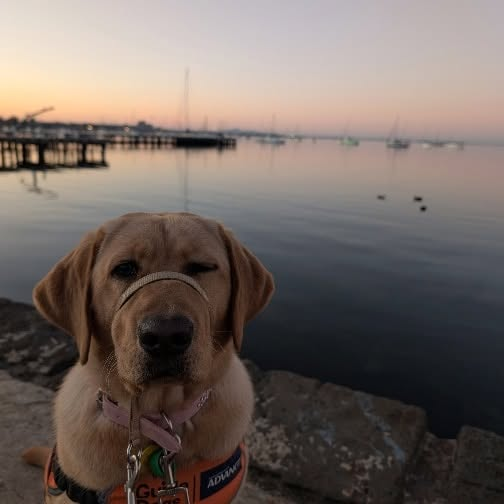
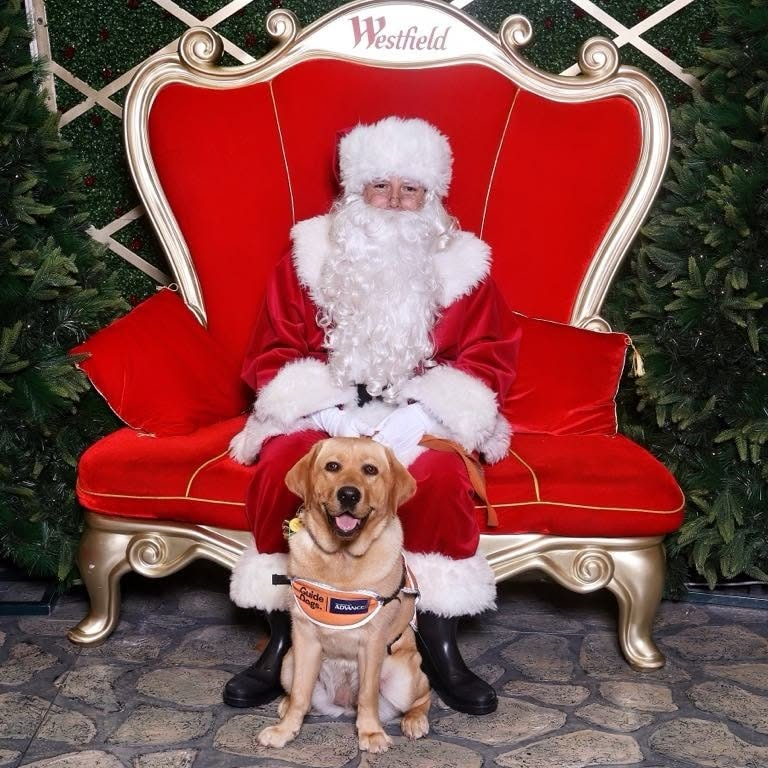
Today marks a bittersweet moment as we say goodbye to Annie, the guide puppy who has spent the last year by my side, bringing joy and inspiration to so many.
Annie has been a reminder of the incredible impact of our furry companions and the dedication it takes to train these remarkable animals.
Now, Annie begins her next journey — continuing her training to become a guide dog and soon finding her forever human. We are so proud of her and grateful for the time she spent with us, making a difference in our community.
01 / What puppy raising actually involvesMore than a year of dog-sitting.
People tend to assume puppy raising is a lovely way to have a dog for a year without the long commitment. It's a bit more structured than that.
Figure 01 · The job
What a raiser is actually doing.
Socialisation, everywhere
Shops, trains, cafés, lifts, escalators, crowds, sporting events. A guide dog has to be unbothered by all of it, which means going to all of it, repeatedly, from a young age.
Consistent routine
Feeding, toileting, rest and training on a schedule. Consistency is the whole method — and it's what makes it a genuine commitment rather than a casual one.
Puppy classes and reporting
Regular group training sessions, progress reporting, and working to a curriculum set by the organisation. You're part of a program, not improvising.
And then handing them back
Which is the part everybody asks about. Yes, it's hard. It's also the entire point, and knowing that from day one makes it a different kind of hard.
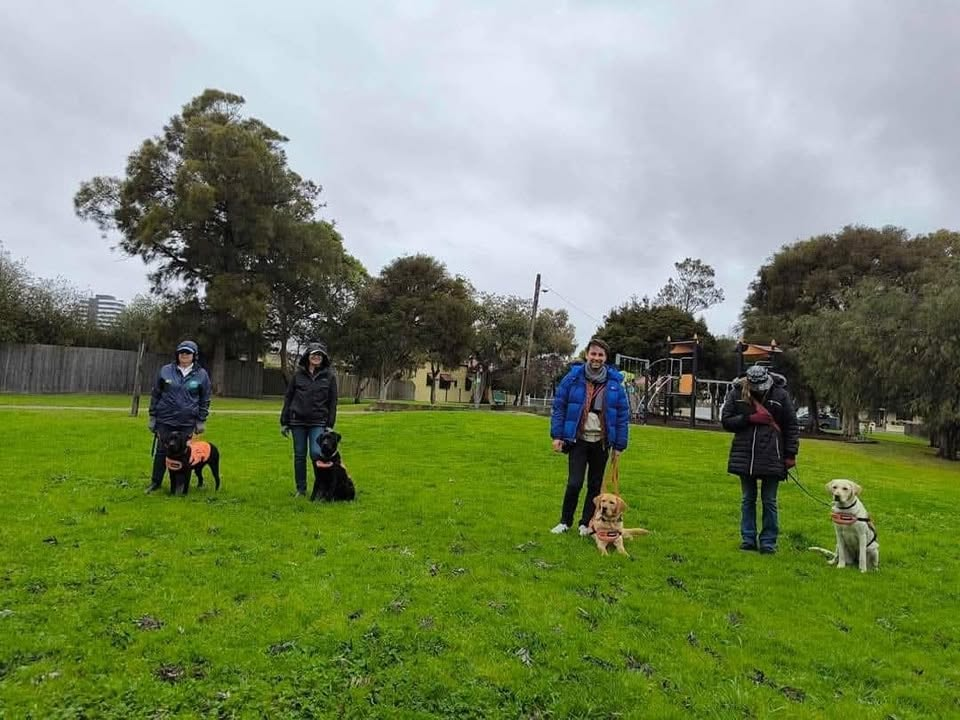

Every ordinary outing is a training session. The shopping centre, the train, the footy, the office. You stop thinking of them as errands and start thinking of them as curriculum.— David Greenwood OAM
02 / Why it mattersWhat a guide dog actually changes.
A guide dog is not a comfort animal or a nice addition to someone's life. For a person who is blind or has low vision, it is mobility infrastructure — the difference between navigating a city independently and not.
The training pipeline that produces one takes about two years and depends heavily on volunteers at the front end. Without raisers, there are no guide dogs. That's the whole reason to do it.
03 / If you're thinking about itHonestly, do.
Guide Dogs Victoria provides the training, the veterinary care, the equipment and the support. What you provide is a home, a routine, and a willingness to take a puppy absolutely everywhere for a year.
It's one of the few volunteering roles I know of where the work is genuinely enjoyable, the outcome is unambiguous, and the organisation has a permanent shortage of people willing to do it.
Thank you, Annie, for your love and dedication. We know you'll go on to do extraordinary things.
If you're curious about puppy raising, Guide Dogs Victoria is the place to start — they'll tell you honestly whether your circumstances suit it. Happy to share what the year is actually like if you'd rather hear it from someone who's done it. Email david@centrestage.org.au with "Guide dogs" in the subject.