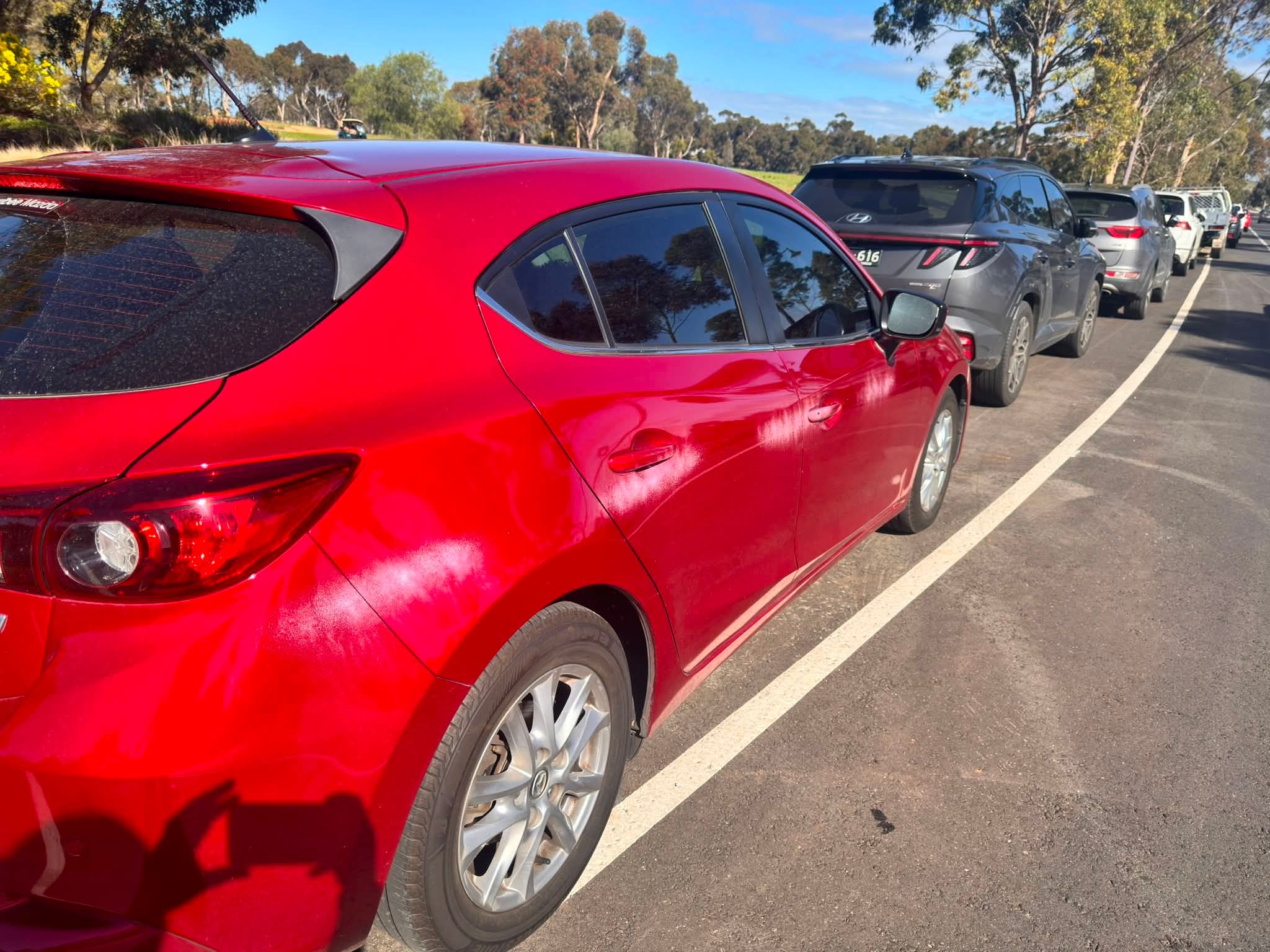
If you've been anywhere near a Geelong community Facebook group in the last week, you've seen it. Photo after photo of the same thing: a fine mist of spray paint along the driver's side of a parked car. Then another. Then twenty more, from streets right across the city.
Yarra Street. Malop Street near La Porchetta. The all-day parking under the Latrobe Terrace bridge. Mercer Street. Geelong West. Just off Pako. Gibb Street in Hamlyn Heights. Reports from residents describe cars hit outside workplaces, outside homes, and in public car parks — in some cases every vehicle along an entire street in a single pass.
Victoria Police are aware and this is an active matter, so I'm not going to speculate about who is responsible or repeat identifying material circulating online. That's for police and the courts, not a comment thread. What I want to talk about is the part that is council's business: why the community found out about this through Facebook rather than through any camera network, and what a council could realistically do about it.
01 / The patternWhat residents are actually reporting.
Reading through the community reports, a consistent picture emerges — and it's worth setting out plainly, because the shape of the problem determines what would actually fix it.
From the community reports
What we know about the pattern.
Wide geographic spread
Central Geelong, Geelong West, Hamlyn Heights, Newtown fringe. This isn't one hotspot — it's a moving problem crossing multiple suburbs and multiple council precincts.
Street-level, kerbside, on-street parking
Cars parked legally along residential streets, commercial strips and all-day public parking. Not car parks with existing surveillance. Not private driveways behind gates.
Fast, mobile, low-effort
Reports describe a person on a bicycle moving down a line of parked cars. Seconds per vehicle. By the time anyone notices, they're several streets away.
Discovered hours later
Almost nobody catches it happening. People come back to their car after work, or notice the next morning. Several initially assumed it was overspray from road line-marking works.
The evidence that exists is private
Where there is footage at all, it's from a resident's doorbell camera, a business's own system, or a dashcam. Not from a council pole.
Based on publicly posted community reports. Locations and details as described by residents; the matter is with Victoria Police.
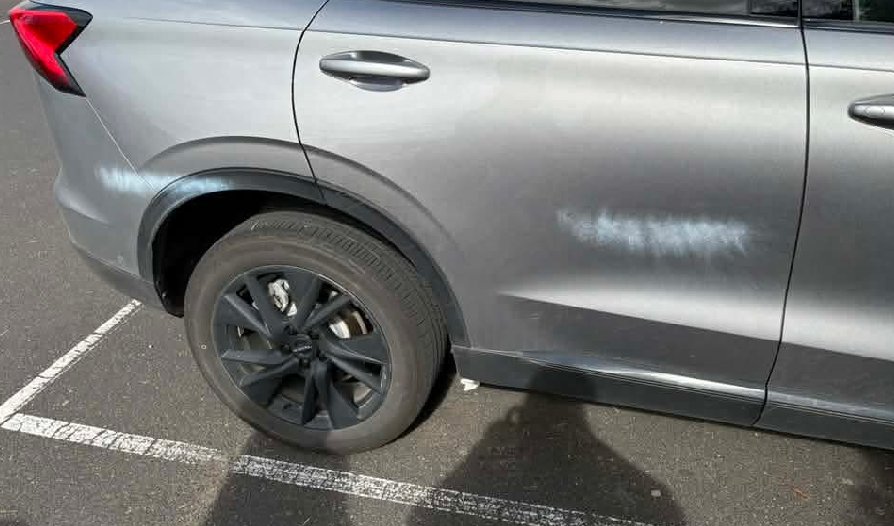
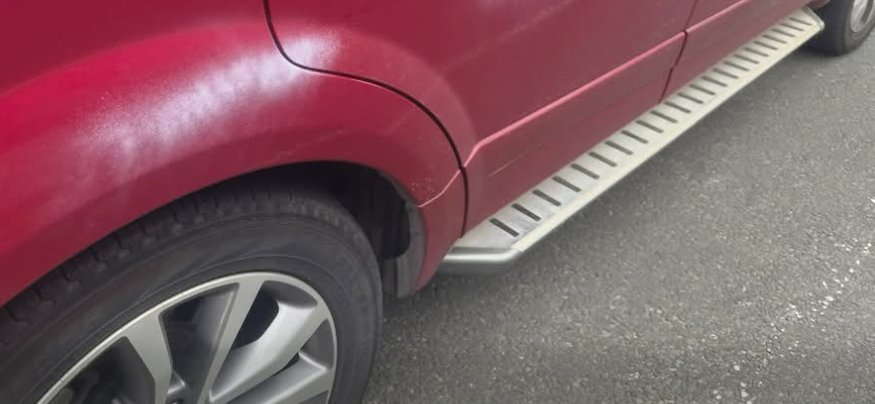
That last point is the one I keep coming back to. Every usable image circulating right now came from a camera that a private individual or a small business paid for themselves. Not one came from public infrastructure.
02 / The real costThis isn't a minor nuisance.
There's a tendency to file this under "annoying" rather than "serious". I'd push back on that.
Some people have been lucky — a light overspray that came off with a cutting compound and a lot of elbow grease. Local detailers have stepped up and offered to remove it safely, which is genuinely decent of them. But others are facing a respray, and that is a very different conversation.
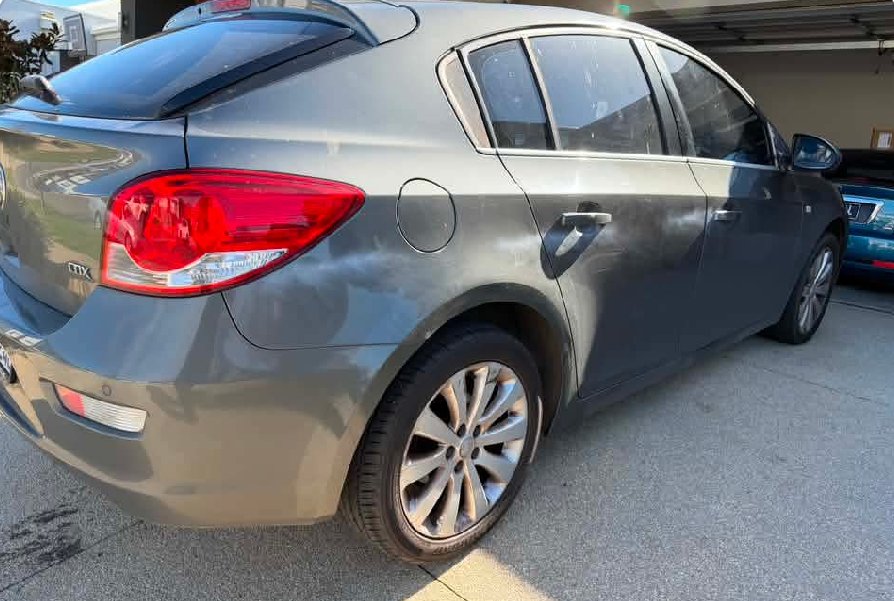
Photograph / After professional correction — several Geelong detailers offered to remove the overspray safely
What it actually costs a household
The bill nobody budgeted for.
Best case
Professional cut and polish. A few hundred dollars, or a Saturday of your own labour and a lot of hope you don't burn through the clear coat.
Common case
Overspray that's bonded into the clear coat on multiple panels. Panel-by-panel correction, potentially a partial respray. Well into four figures.
The insurance trap
Claim it and you may pay an excess of $700–$1,000 and lose your no-claim rating. For a $1,200 repair, many people simply wear the cost rather than claim.
The rideshare driver
If your car is your income — rideshare, delivery, a mobile trade — a vehicle you can't present to customers is lost earnings on top of the repair.
Multiply the middle two columns by the number of vehicles reported across Geelong in a single week. This is a five- to six-figure hit to households, absorbed quietly and privately.
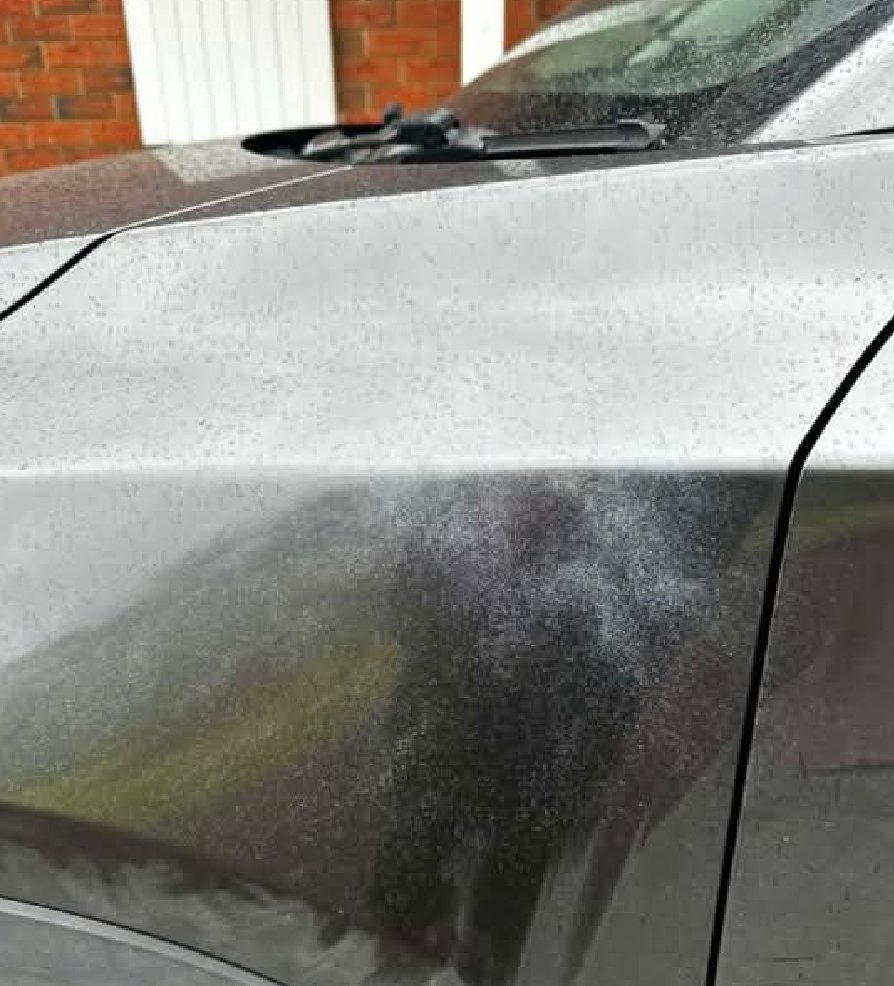
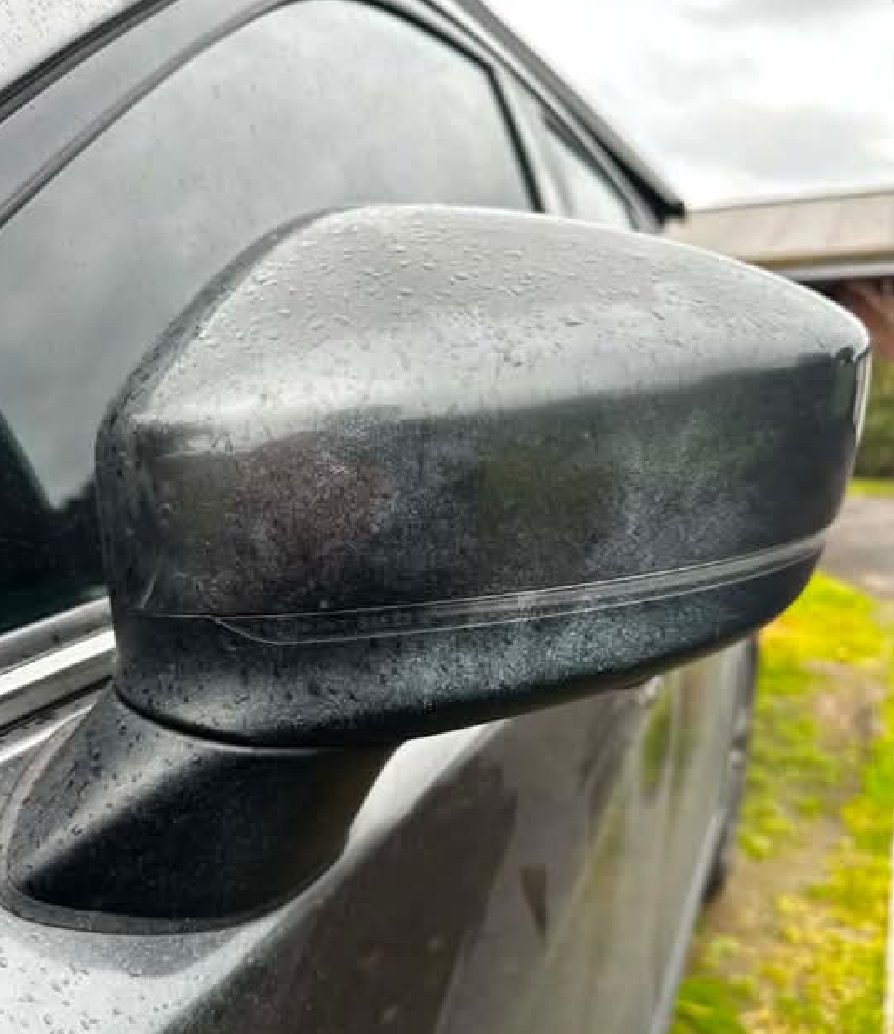
And there's a cost that doesn't appear on any invoice: the feeling that your street isn't looked after. People are angry, and the anger is proportionate. Somebody walked down a public street in a city of a quarter of a million people and damaged property belonging to dozens of ordinary residents, and the collective response available was to post about it.
03 / What council usually doesAnd why it doesn't fit this problem.
The standard council answer to street crime is public CCTV. Poles, cameras, a monitoring contract, a data storage arrangement, a privacy impact assessment, a procurement process. It has its place — a busy nightlife precinct with a documented assault problem is exactly the right use case.
But look at the unit economics. A fully installed, monitored, network-connected public CCTV camera on council infrastructure — pole, power, data backhaul, compliance, ongoing monitoring and storage contracts — runs to tens of thousands of dollars each. Half a million dollars gets you somewhere in the order of six to eight cameras.
Six to eight cameras. Across a municipality with over 2,000 kilometres of local road.
The arithmetic worth sitting with
Two ways to spend $500,000 on community safety.
Option B — subsidised voucher scheme
Roughly 2,000–3,000 households and small businesses each receive a subsidy toward a quality Wi-Fi camera system they own, install and control — concentrated in the streets where incidents are actually being reported.
Option A — traditional public CCTV
Approximately six to eight council-owned camera poles, in six to eight fixed locations, plus an ongoing monitoring and storage contract that recurs every single year thereafter.
Indicative figures for comparison. Actual costs vary considerably with site conditions, power and data availability, and procurement model — which is precisely why the comparison deserves to be done properly and published.
A mobile offender on a bicycle crossing five suburbs will not be caught by eight fixed poles. The maths simply doesn't work. But they might well ride past forty doorbell cameras.
04 / The proposalA community camera co-investment scheme.
Here's what I think Greater Geelong should be actively investigating. It isn't a new idea — versions of it operate in councils and police jurisdictions around Australia and overseas — but it isn't being pursued here at any meaningful scale.
How it would work
Four moving parts.
05 / Spend it hereWhy the money should stay in Geelong.
This part matters as much to me as the cameras do, so I want to spell it out rather than leave it as a bullet point.
A subsidy scheme of the size I'm describing puts a meaningful amount of public money into the market at once. Where that money lands is a choice, not an accident. Design the scheme badly and most of it leaves the region within a week — a resident clicks through to an online marketplace, a box arrives from an interstate distribution centre, and Geelong is left with a camera and nothing else.
Design it properly and the same dollar does two jobs. It buys the camera and it lands on the counter of a business that employs local apprentices, sponsors the local footy club, pays rates here and banks here. That's not a nice-to-have bolted onto a safety program. It's the difference between spending money and investing it.
Same voucher, two outcomes
Where the dollar goes.
Redeemed locally
A Geelong-owned security or electrical business makes the sale. It may also do the install — a second local job. Wages are paid here, GST and payroll flow through local accounts, the operator's own suppliers are often local too, and the customer has somebody to ring when the camera stops working in eighteen months. The money circulates before it leaves.
Redeemed online, offshore
The transaction completes in seconds. The margin leaves the region immediately. No local job is created, no local install, no local warranty relationship. Support is a chat window in another timezone. Public money has bought hardware and nothing else.
Both purchases produce a working camera. Only one of them produces anything else.
There's a practical dimension too, not just a civic one. A local supplier will tell a customer that the camera they've chosen won't cover the driveway properly, or that the footage will be unusable at night at that mounting height, or that the retention setting needs changing. A cardboard box from a warehouse will not. The quality of footage this scheme produces depends heavily on whether somebody knowledgeable was involved in the purchase — and that is precisely the thing a local specialist provides and an online cart does not.
What "locally owned" should mean in the scheme rules. Not a definition to be fudged later:
• Ownership based in the Geelong region — the business is owned by people who live here, not a franchise of a national chain with a local shopfront.
• A real local presence — a physical premises or a locally based mobile operation, with local employees.
• Open to any qualifying business — the approved supplier list is published, the criteria are transparent, and any local operator meeting the standard can join. No favourites, no closed panels.
• Installation counts — if a resident buys hardware elsewhere but has it installed by an approved local installer, the installation portion should still be claimable. The goal is local economic benefit, not forcing a particular purchase.
If Greater Geelong is going to spend public money on community safety, it should be entirely unremarkable that we ask the money to do some work for the local economy on its way through. Plenty of councils already apply local-procurement weighting to their own contracts. This simply extends the same principle to a subsidy.
06 / Why it's betterSix arguments, plainly.
The case for co-investment
What this model does that poles don't.
Coverage density
Hundreds or thousands of vantage points instead of eight. Against a mobile offender, density beats resolution every time.
Local economic return
Every voucher is redeemed at a locally owned supplier or installer, so the safety spend doubles as a small-business stimulus. A pole contract sends the money to a national vendor; this keeps it on Geelong counters.
No recurring council cost
The resident owns the device and pays for their own power and internet. Council's cost is one-off. Public CCTV carries a monitoring and storage bill forever.
Insurance savings for residents
Many insurers offer premium discounts for monitored alarms and security systems. A one-off subsidy can produce an annual saving for the household on top of the safety benefit.
Direct small business support
A café or shop on Pako, Malop or the Lara main street gets tangible help with a real operating cost. That's economic development spending as much as it is community safety spending.
Better privacy posture
Council is not building a municipal surveillance network. It funds private devices, holds no footage, and controls no cameras. Owners keep control of their own recordings.
Deterrence that's visible
A street with visible cameras on multiple houses reads very differently to someone considering damaging a car than a street with one pole at the far corner.
07 / Where the money comes fromNot just rates.
The obvious objection is cost, so let's deal with it. Councils are not the only funder of community safety infrastructure, and a scheme like this is precisely the sort of thing higher-tier grant programs are designed for.
Funding avenues worth pursuing
Three levels, three different pots.
Commonwealth crime prevention and community safety grants
Federal programs have repeatedly funded CCTV, lighting and security infrastructure for community organisations and local government. Program names and rounds change, so the practical step is a standing watch on the grant calendar and a shovel-ready application sitting in the drawer.
Victorian community safety and crime prevention funding
The State Government runs crime prevention and public safety infrastructure funding streams that have supported CCTV, lighting and place-based safety projects. Eligibility typically favours evidence-based, data-driven proposals — which a scheme targeted at documented incident hotspots is well positioned to be.
Council's own safety and graffiti budgets
Council already spends real money on graffiti removal and community safety each year. Some of that is reactive cleanup. A portion redirected into prevention that reduces future cleanup demand is a defensible reallocation, not new spending.
Grant program names, amounts and eligibility change between rounds. The point isn't a specific program — it's that the pursuit needs to be active and ongoing, not reactive after the fact.
Has the City of Greater Geelong modelled a community camera co-investment scheme, and if so, what did the analysis find?
Not "will you install more CCTV". A specific question about whether a subsidised, resident-owned, voluntary-register model has been costed against traditional public CCTV on a dollar-per-covered-address basis — and if it hasn't, why not.
08 / The Pakington Street comparisonWhy this model stretches further.
The most recent local example of the traditional approach is the camera funding package for Pakington Street. It's a good test case, because Pako is exactly the sort of precinct where fixed public CCTV makes the most sense — a dense, busy, well-defined commercial strip with a concentrated night-time economy. If the model works anywhere, it works there.
So let's take it on its own terms and ask a fair question: what does the same money do under each approach?
Same budget, two approaches
A fixed-camera package versus a co-investment scheme.
Fixed public camera package
A defined number of poles along one strip. Council owns the hardware, carries the maintenance, pays the data and storage bill, and renews the monitoring contract — every year, forever. Coverage is excellent in that one street and zero everywhere else.
Community co-investment scheme
The same capital spread across hundreds or thousands of premises — including every side street the strip feeds into. Residents and traders own and run the hardware. Council's cost ends when the vouchers are issued.
Both are legitimate tools. The argument here isn't that fixed cameras are worthless — it's that nobody has publicly shown the comparison, and the comparison is what determines whether ratepayers got the best available coverage for the money.
Notice what happened with the spray paint incidents. They weren't confined to one commercial strip. They were reported off Pako, in Geelong West, in Hamlyn Heights, on Mercer Street, on Yarra Street, and under the Latrobe Terrace bridge. A camera package built for one precinct, however well designed, cannot follow an offender who moves between suburbs on a bicycle.
The recurring cost problem
This is the part I'd most like ratepayers to understand, because it rarely gets explained when a camera announcement is made.
Public CCTV is not a one-off purchase. It is a subscription that council enters into on the community's behalf and then renews indefinitely. The install cost is the headline; the operating cost is the actual commitment.
What keeps costing money after the ribbon is cut
The bill that arrives every year.
Data and connectivity
Every camera needs a network link and somewhere to send the footage. That's a monthly line item per device, for the life of the asset.
Storage and retention
Continuous recording at usable resolution generates serious volume. Retention periods are set by policy, and the storage bill scales directly with them.
Monitoring contracts
If cameras are actively monitored rather than simply recording, that is a staffed service — procured, tendered and renewed on a cycle.
Maintenance and faults
Cameras fail, lenses fog, poles get hit, firmware needs patching. Someone has to be paid to attend, and it isn't cheap at height on a public street.
Replacement cycle
Hardware has a service life. In roughly seven to ten years the whole package needs replacing — and the capital cost lands again.
Compliance overhead
Privacy impact assessments, footage-access policies, audit obligations and freedom-of-information handling all consume officer time permanently.
None of these disappear. They compound, and they compete with every other line in the budget in every future year.
A co-investment scheme has almost none of that tail. Council issues a voucher, verifies the purchase, and the transaction is complete. The resident pays their own power bill and their own internet. They replace the device when it fails, on their own timetable, because it is their property. There is no council monitoring contract to renew, no council storage to fund, and no council-owned asset depreciating on the balance sheet.
Ten-year view
Where the money actually goes over a decade.
It also puts capability in the community's hands
There's a difference between doing something for a community and enabling a community to do it themselves, and I think it matters more than it sounds.
A council camera on a pole is a service delivered to residents. It's useful, but it's passive. The resident's only role is to hope it was pointed the right way, and then to ask council for the footage through a process most people have never heard of.
A camera the resident owns is different. It protects their car and their house as well as the street. It works whether or not council is watching. It gives them something to offer a neighbour whose car was hit. It gives the café owner a way to help the shop two doors down. Over time you don't get a surveillance network — you get a street full of people who are equipped and who look out for each other.
Spend once and the community is capable. Spend annually and the community stays dependent on the next budget cycle holding.
And there's a resilience point too. A single funding package covering one strip is fragile: if the budget tightens in three years and the monitoring contract isn't renewed, the coverage degrades. Devices owned by two thousand separate households don't stop working because a council report recommended a saving.
I'm not arguing that funding shouldn't have gone to Pako. It's a major precinct, the traders advocated for it, and fixed cameras genuinely suit a concentrated night-time economy better than they suit a quiet residential street.
My argument is narrower and, I think, harder to dismiss: the alternative model was never publicly costed alongside it. Before the next package is funded anywhere in Greater Geelong, that comparison should be done, published, and debated on the numbers.
09 / Being honest about the limitsWhat this doesn't solve.
I don't want to oversell it, so let me be straight about the weaknesses — because any proposal that can't survive its own objections isn't worth putting up.
Fair criticisms
Four things this model can't do.
Cameras don't prevent everything
Evidence on CCTV as a deterrent is genuinely mixed. It's strongest for property crime in car parks and weakest for spontaneous or impulsive offending. This is a property-crime problem, which is the better end of that range — but it's not a guarantee.
Equity needs designing in
A part-subsidy still requires a household to fund the balance. Any scheme worth running needs a full-subsidy category for pensioners, health care card holders and low-income households, or it simply hands money to people who'd have bought a camera anyway.
Privacy must be governed, not assumed
A register of camera locations is sensitive data. It needs a proper privacy impact assessment, clear retention rules, and a hard prohibition on live-feed access. Getting this wrong would rightly destroy public confidence in the scheme.
It's not a substitute for policing
Footage is only useful if there's capacity to act on it. This complements police resourcing; it doesn't replace it, and shouldn't be sold as if it does.
None of those are reasons not to do it. They're the design brief.
10 / What to do right nowIf your car has been hit.
Report it to Victoria Police. Even if you think nothing will come of it, even if the damage is minor. Police allocate resources based on reported incident volume. Twenty unreported incidents look like nothing in the data; twenty reported ones look like a pattern. Report online or at your local station and keep the reference number.
Photograph everything before you clean it. Wide shots showing the vehicle and location, close-ups of each affected panel, and the street sign or a landmark. Note the date, time you discovered it, and where it was parked.
Check your own footage and ask neighbours. Doorbell cameras, dashcams in park mode, and business systems nearby. Ask before the retention window expires — many consumer systems overwrite in seven to thirty days.
Get a quote before deciding on insurance. Compare the repair quote to your excess. For lighter overspray, a professional cut and polish may cost less than your excess.
Don't attempt aggressive removal yourself. Solvents and abrasives can damage clear coat far more expensively than the paint did. Several local detailers have offered proper removal — that's the safer path.
Report graffiti on council property to the City. Council manages graffiti removal on its own assets, and logged reports build the case for a funded prevention response.
11 / The bigger pointCommunity intelligence beats infrastructure gaps.
There's something worth noticing in how this unfolded. The community mapped this incident faster and more comprehensively than any official system did. Within days, residents had assembled locations, dates, a pattern of movement, and photographic evidence — through nothing more than people posting in local groups and comparing notes.
That's genuinely impressive. It's also an indictment. The information existed; there was simply no mechanism to collect it.
When the community can build a clearer picture of an incident than the systems we fund can, the honest conclusion is that we've funded the wrong systems.
I'd rather council spent half a million dollars putting cameras on two thousand streets that residents own and control, than on eight poles in locations chosen by a consultant three years ago. It's cheaper per address, it's better for privacy, it saves households money on insurance, it directly helps small business, and it puts the coverage where the problem actually is.
To the people whose cars were hit: this shouldn't have happened, the anger is fair, and I hope the police get somewhere with it. To the detailers who offered to help fix it — that's the Geelong I know.