Small local businesses don't lose to big-format retail on price — they can't, and shouldn't try to. They win or lose on the things a chain store can't replicate: convenience, parking that actually works, foot traffic, and a town centre people want to be in rather than just drive through.
01 / What genuinely helps
What council can actually move
- Parking turnover management — short-stay parking near shopfronts, not just more parking overall
- Streetscape investment that makes people want to walk between shops, not just drive to one
- Fast, predictable planning permit turnaround for fit-outs and small renovations
- Footpath trading permits that are easy to apply for and renew
What sounds good but doesn't move much
- "Shop local" campaigns with no accompanying parking or streetscape change
- One-off events without a plan for what happens the other 360 days a year
- Rate relief announcements that aren't matched by permit or process improvements
02 / The permit timeline problem
For a small operator, the gap between "I want to open" and "I'm trading" is almost entirely eaten up by permit and fit-out approval timelines, not by the actual physical work. A planning permit that takes months rather than weeks costs a small business real money in rent paid on an empty shop before a single dollar of revenue arrives. Council doesn't control every part of that timeline, but it controls a meaningful chunk of it — and a faster, clearer process is one of the few genuinely free ways to support small business.
03 / What Lara specifically needs
A growing residential population without a proportionate increase in daytime foot traffic through the town centre is a real risk — new estates often default to driving straight past the town centre to big-format retail, rather than stopping in it. Streetscape and safe-crossing investment that makes Lara's town centre a genuine walking destination, not just a strip you drive through, is the difference between local retail growing with the population or being bypassed by it.
04 / Parking: the argument everyone gets wrong
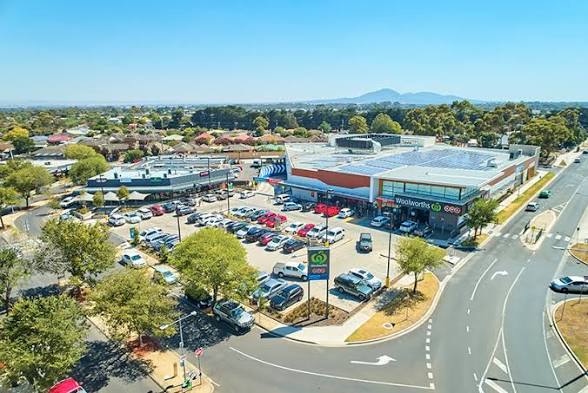
Every town centre business debate eventually becomes a parking debate, and it's almost always framed incorrectly. The instinct is "we need more parking". The evidence from town centres across Australia is that the binding constraint is usually not the total number of spaces — it's turnover: how many different customers each space serves per day.
A single space occupied by one all-day parker serves one customer. The same space with a two-hour limit might serve four or five. Long-stay parking by workers and commuters in prime shopfront spaces is what makes a town centre feel "full" while businesses report weak foot traffic — and the fix is time-limit management and providing long-stay parking further out, not necessarily building more spaces.
Figure 01 · Same spaces, very different outcomes
| Approach | Effect on businesses |
|---|---|
| Unrestricted parking outside shopfronts | Filled early by workers and commuters; customers circle or leave |
| Short-stay limits outside shopfronts, long-stay further out | Higher turnover per space; more customers served with the same infrastructure |
| More parking, no time management | Expensive; often fills with the same long-stay parking, with limited turnover gain |
| Better walking connections between precincts | Customers park once and visit several businesses instead of one |
That last row matters most for Lara specifically. A customer who parks once and walks to three businesses is worth considerably more to the town centre than three separate customers who each drive to one and leave.
05 / The two-precinct problem
Lara's retail is effectively split between the traditional township strip and the larger supermarket-anchored precinct. That's a common pattern, and it creates a real risk: the anchored precinct captures the convenience trip, and the traditional strip is left with whatever spills over — which, without a good walking connection between the two, is not much.
The businesses most exposed to this aren't the supermarkets. They're the independent operators — the café, the barber, the bakery, the gift shop — whose viability depends on being part of a trip rather than the destination of one. Whether they capture that trade is almost entirely a function of how walkable, shaded, safe and pleasant the connection between the precincts is. That's an infrastructure question with a direct commercial consequence, and it's squarely council's responsibility.
06 / Rates, and what a business actually pays
Commercial properties are typically rated differently to residential ones, and the differential rate a council sets for commercial property is a genuine council decision — one of the few direct financial levers council holds over local business costs. It's worth being straight about the trade-off: lowering the commercial differential shifts that revenue burden onto residential ratepayers, and there's no version where it simply disappears.
That's why I'd generally rather see council improve the things it controls that cost businesses money without generating revenue for anyone — slow permit processing, unclear footpath trading rules, poor streetscape maintenance — before adjusting the rate differential. A permit approved in three weeks instead of three months saves a small operator real money and costs the ratepayer nothing.
07 / Growth as opportunity or bypass
Thousands of new residents arriving in the ward is either the best thing to happen to Lara's town centre or entirely irrelevant to it, and which one depends on decisions being made now. New estates connected to the town centre by good footpaths and safe crossings generate town centre trade. New estates whose most convenient retail is a highway drive in the other direction generate none.
Figure 02 · The fork in the road
The town centre grows with the population
- Walking and cycling connections from new estates into the town centre
- Streetscape that makes the centre somewhere to linger
- Diverse tenancy mix that gives people multiple reasons to stop
- Community events that establish the centre as the town's social hub
The town centre stagnates while the town grows
- New estates car-dependent, oriented toward highway retail
- Town centre treated as a through-route, not a destination
- Vacancy rates rise despite population growth
- Independent operators close; chains fill the gaps or nothing does
08 / What I'd actually push for
Faster and more predictable permit turnaround, published as a performance measure so it can be held to account. Parking managed for turnover rather than expanded for its own sake. A genuine walking and cycling connection between Lara's retail precincts and the new estates. And a streetscape standard that treats the town centre as a place rather than a road. None of that requires a rate cut, and all of it makes the difference between local businesses growing with the town or being bypassed by it.