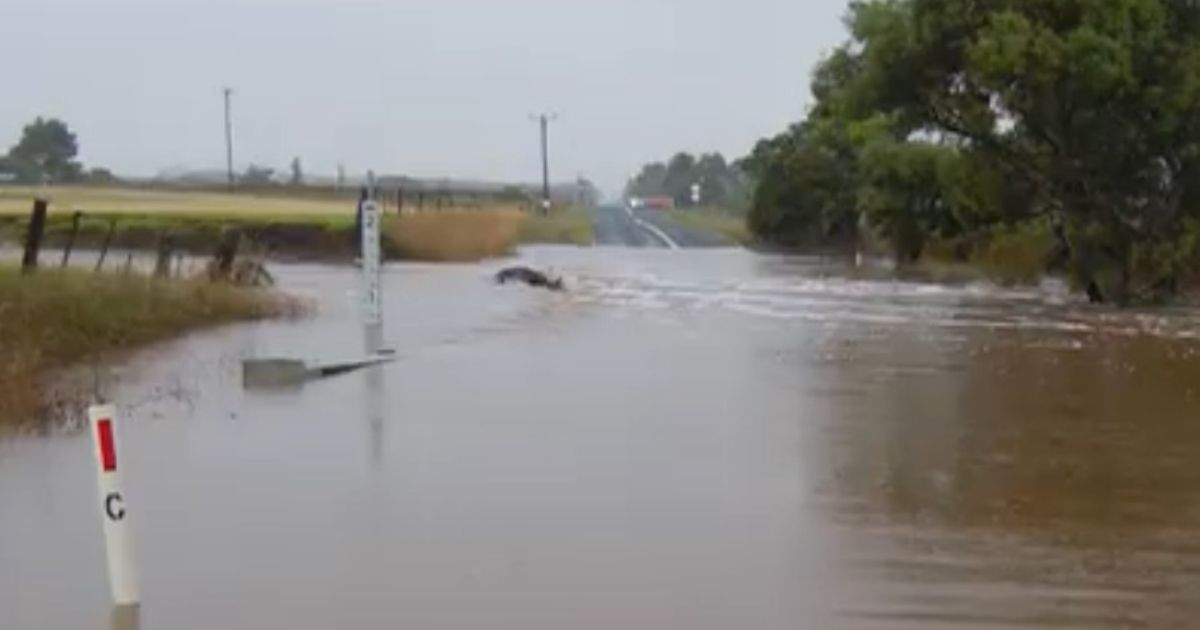
Everyone in Geelong knows a street that floods. Usually the same one, in the same spot, every heavy rain, for years. And usually the residents have reported it repeatedly and been left with the impression nobody cares.
Most of the time, what's actually happened is a mismatch: a stormwater problem reported to a water authority, a waterway problem reported to a council, or a defect reported so vaguely that it was closed without inspection. So let's untangle it.
01 / Three systemsThey are not the same pipe.
Figure 01 · Which system is it?
Three networks, three owners, three processes.
Stormwater drainage
Street gutters, side-entry pits, underground pipes, culverts and open drains that carry rainwater off roads and properties. Generally a council responsibility for the local network. This is what most street flooding actually is.
Sewerage and water supply
Wastewater from toilets, sinks and showers, plus drinking water mains. Barwon Water. If flooding smells, or if you have sewage backing up inside a property, this is urgent and it is theirs, not council's.
Waterways and floodplains
Creeks, rivers, wetlands and the floodplains around them. Managed with catchment and state authorities. When a creek breaks its banks, that is a different problem to a blocked pit — and a different fix.
There is also road drainage on major arterials and the Ring Road, which sits with the state transport department rather than council. If your flooding is on a highway, that's why council may have referred you on.
02 / Diagnose itFour questions that identify the cause.
Figure 02 · Working out what's wrong
The answers point to very different fixes.
That fourth question is the one most worth asking. Drainage problems that appear suddenly almost always have a cause, and identifying it turns a vague complaint into a specific, actionable one.
"It floods every time it rains" is a maintenance report. "It only floods in a big storm" is a budget submission. They go to different people and they need different arguments.— David Greenwood OAM
03 / Report it properlyWhat to include.
Figure 03 · A drainage report that gets acted on
Six details worth more than six paragraphs.
Record while it's wet
- Photos and a short video during the flooding, not after
- Depth against something known — a kerb, a tyre, a fence post
- Extent — how far along the street, which properties
- Date and time, and roughly how heavy the rain was
Include in the report
- Exact location — nearest street number, which side, nearest pit
- History — how long, how often, whether it's worsening
- Consequence — property entry, blocked access, safety risk to pedestrians
- Reference number — always ask for it and keep it
A dated series of photographs across several storms is the single most persuasive thing a resident can hold. It converts an anecdote into a documented, recurring defect.
04 / What can be doneAnd honestly, what can't.
Figure 04 · Realistic responses
From cheap and fast to expensive and slow.
| Response | What's involved |
|---|---|
| Clearing and cleaning | Pit clearing, jetting a blocked line, removing silt. Fast, cheap, routine — and resolves a large share of complaints. |
| Inspection with a camera | Identifies collapsed pipes, root intrusion, or a line that was never connected properly. Worth requesting explicitly for recurring problems. |
| Localised works | An extra pit, a regraded kerb, a raised threshold, an improved outfall. Modest cost, often programmed for a future year rather than done immediately. |
| Capacity upgrade | Replacing an undersized network across a catchment. Expensive, disruptive, competes with every other capital priority. Usually multi-year and grant-dependent. |
| Accepting some flooding | Drainage systems are designed to a standard, not to eliminate flooding entirely. Roads are sometimes intended to carry water briefly in extreme events. This is a legitimate answer — but you're entitled to know the design standard and whether your street meets it. |
05 / Growth and drainageThe part that's about planning.
Every new roof, driveway and road adds impervious surface, which means more water arriving faster in the same system. Development is required to manage its own stormwater, but the cumulative effect across a growth corridor is exactly the kind of problem that appears gradually and then all at once.
This is why drainage capacity is a legitimate planning consideration, and why flood overlays exist. If you're objecting to a development and drainage is genuinely part of your concern, it is a valid planning ground — not a peripheral gripe.
06 / If water enters your homePractical steps.
For flooding that threatens property or safety, call VICSES on 132 500 — or 000 if life is at risk. Photograph everything for insurance before you clean up. Report it to council with a reference number, because a documented history matters enormously if you ever need to argue that a known defect went unaddressed. And treat floodwater as contaminated, especially if there is any smell of sewage.
If you have a street in the You Yangs Ward that floods repeatedly, send me photographs with dates, the location, and any reference numbers you already have. Documented recurring flooding is one of the more winnable arguments in local government — but it needs the evidence. Email david@centrestage.org.au with "Drainage" in the subject.