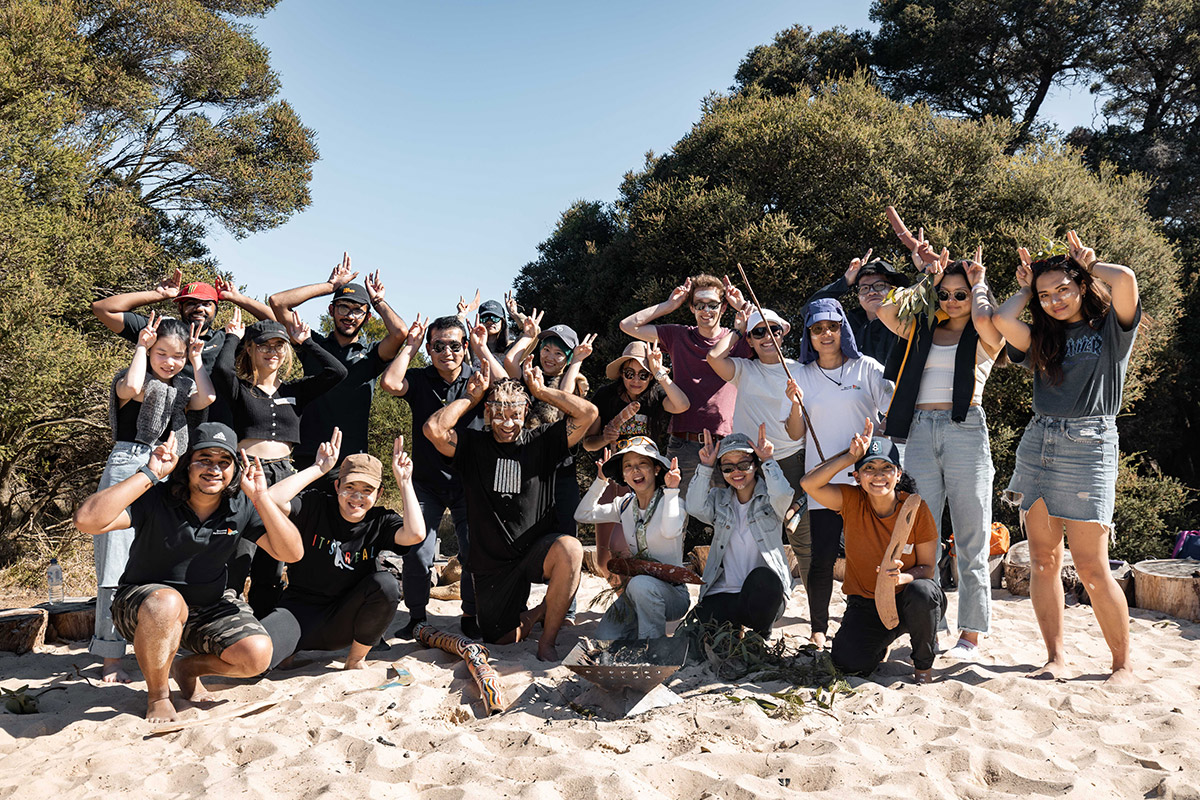
I have spent fifteen years running an organisation that depends on volunteers. In that time I have watched a lot of community groups start, and a lot of them stop. The ones that stopped almost never ran out of enthusiasm. They ran out of structure.
So this is the practical sequence — the order I would do it in if I were starting again tomorrow.
01 / Before anything elseAnswer three questions honestly.
Figure 01 · The pre-check
If you can't answer these, don't incorporate yet.
Does something like this already exist?
Joining an existing group and revitalising it is almost always faster than founding a new one. Check the council's community directory and the neighbourhood houses first.
Who are the other four people?
Not supporters — the four people who will actually turn up and hold a role. If you can't name them, you have an idea, not a group.
What happens if you step back?
A group that only functions because of one person is a project with an expiry date. Design for succession from the first meeting.
02 / Incorporate or notThe genuine fork in the road.
An unincorporated group is simple: no registration, no reporting, no annual obligations. It is also legally invisible — it cannot hold property, sign a lease, get its own insurance easily, or apply for most grant funding, and members can carry personal liability.
Figure 02 · Three structures
Pick the smallest one that does the job.
Stay informal
Fine for a walking group, a book club, a street-level working bee. No paperwork, no bank account required, no reporting. Not viable the moment you want funding, a lease or public activities involving risk.
Find an auspice
An existing incorporated organisation — a neighbourhood house, a larger community group, sometimes the council — holds funds and legal responsibility on your behalf. You get grant eligibility and insurance cover without the governance burden. Strongly under-used.
Incorporate as an association
Registered with Consumer Affairs Victoria. You get legal identity, limited liability, the ability to hold property and sign leases, and full grant eligibility. You also get a constitution, office bearers, annual general meetings, annual statements and record-keeping obligations, permanently.
The mistake I see most often is incorporating on day one because it feels official. Incorporation is a set of permanent obligations. Take it on when you need what it gives you.
Auspicing is the most under-used tool in community organising. It gives a group of eight people the funding eligibility of an established organisation without asking them to become one.— David Greenwood OAM
03 / The order of operationsDo these in sequence.
Figure 03 · Setup sequence
Eight steps, in this order.
04 / Insurance and tenureThe two that actually stop groups.
These deserve their own section because they are where enthusiasm meets administration and usually loses.
Insurance. Public liability cover is a condition of operating on council land, running a public event, or receiving most funding. It is a real annual cost with no natural funding source. Ask the council whether it holds any blanket or group cover for community organisations, and ask other local groups who they use — buying alongside an existing scheme is usually far cheaper than going alone.
Tenure. If your activity happens on a specific piece of land, get the arrangement in writing, for years rather than months. Capital grants routinely require documented tenure, which means an informal arrangement quietly locks you out of the funding you most need.
05 / The committeeDesign against burnout.
Figure 04 · Roles worth separating
Five jobs, five different people.
Chair
Runs meetings, keeps to the agenda, holds the group to its purpose. The job is facilitation, not doing everything.
Secretary
Minutes, records, correspondence, compliance dates. The least glamorous and most load-bearing role in any group.
Treasurer
Banking, records, a simple monthly report. Should never also be the sole signatory or the person who buys everything.
Volunteer coordinator
Rosters, welcomes, follow-up. The difference between people attending once and people staying.
Communications
One person owning the page, the newsletter and the noticeboard. Consistency matters more than volume.
And a deputy for each
Every role shadowed by someone learning it. This is the single highest-return governance habit there is.
06 / Year-one mistakesThe five I see most.
Figure 05 · Avoidable failures
What actually kills new groups.
| Mistake | The fix |
|---|---|
| One person doing everything | Split roles from the first meeting, even if some are barely part-time. A group of one is a hobby. |
| No written records | Minutes every meeting, a shared folder, decisions dated. Costs ten minutes; prevents years of confusion. |
| Activity before insurance | Insure first. A single incident at an uninsured public activity can end the group and expose individuals personally. |
| Verbal land arrangements | Get it in writing, for years. The person who said yes will eventually leave. |
| Chasing every grant | Two well-matched applications beat eight scattered ones, and unmatched funding drags a group away from its purpose. |
If you're starting something in the You Yangs Ward and want a sounding board — on structure, insurance, tenure or how to get a committee off the ground — I'm happy to talk it through. Fifteen years of running a volunteer organisation mostly taught me which mistakes to skip. Email david@centrestage.org.au with "New group" in the subject.