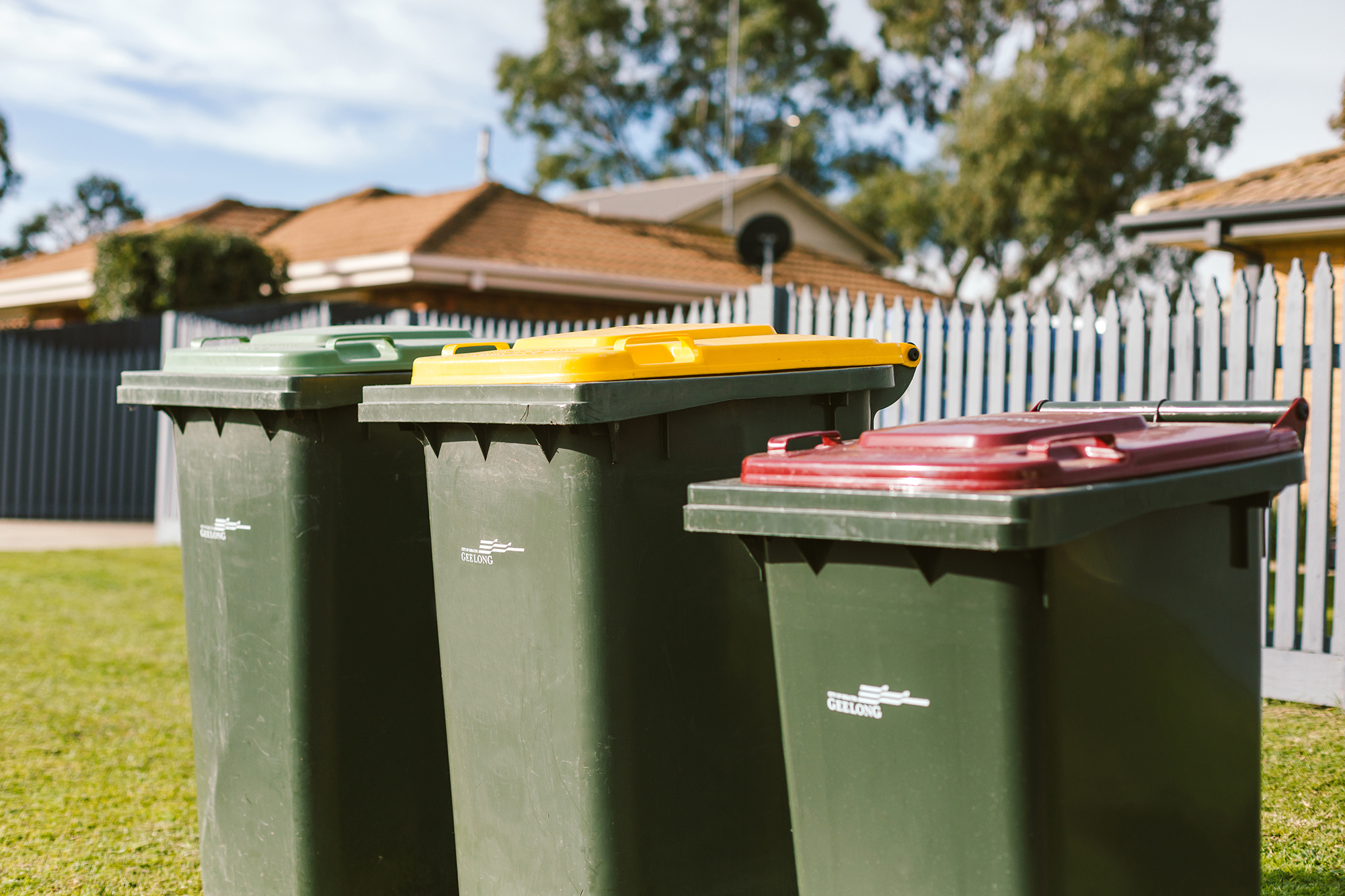
Most residents can name their bin colours without thinking twice. Fewer could say confidently what actually happens after the truck drives off. Here's the plain version.
01 / Where each bin actually goes
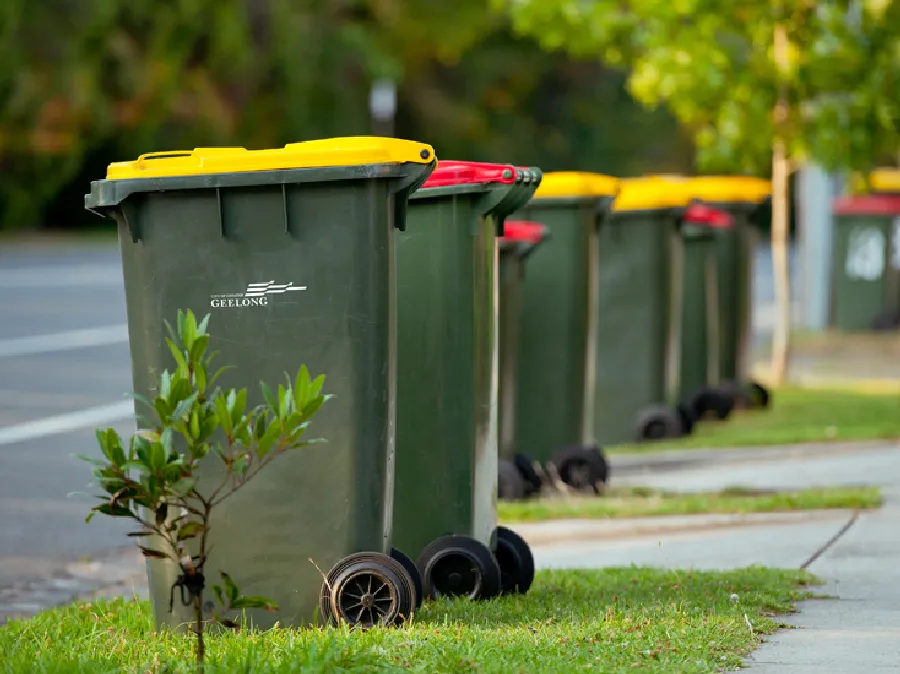
Figure 01 · Three bins, three destinations
| Bin | Contents | Where it goes |
|---|---|---|
| Red / general waste | Non-recyclable household rubbish | Landfill |
| Yellow / recycling | Paper, cardboard, glass, plastics, metals | A materials recovery facility, sorted and sold to reprocessors |
| Green / FOGO | Food scraps and garden organics | An organics processing facility, composted or converted to soil products |
FOGO (food organics, garden organics) is the newest addition to most Victorian councils' collection systems, introduced because food waste sent to landfill breaks down anaerobically and produces methane — a far more potent greenhouse gas than the CO2 released when organics are composted properly instead.
02 / Why FOGO was introduced
Two pressures drove the shift. First, Victoria's landfill capacity is finite and diverting organic waste extends the life of existing landfill sites significantly, since food and garden waste makes up a large share of what used to go in the red bin. Second, state emissions-reduction targets treat organics diversion as one of the most cost-effective ways to cut landfill methane, which is why the Victorian Government has progressively required councils to roll FOGO out rather than leaving it optional.
03 / What it costs, and who pays
Waste collection is funded through the waste charge on your rates notice, not general rates revenue — councils are required to keep it cost-reflective rather than subsidised from other budgets. That charge covers truck contracts, landfill levies (a state charge per tonne that funds environmental programs), processing fees at recycling and organics facilities, and bin supply and maintenance. Diverting more waste to FOGO and recycling, and less to landfill, genuinely reduces the landfill levy component over time — which is part of the financial case for taking it seriously, not just the environmental one.
04 / Contamination: the expensive mistake
Contamination is the single biggest avoidable cost in the entire waste system, and it works differently in each stream. In the recycling bin, one wrong item — a plastic bag, a nappy, a broken drinking glass — can downgrade the value of an entire load, and in bad cases send it to landfill despite everything else in it being genuinely recyclable. In the FOGO bin, plastic is the critical problem: compost containing plastic fragments can't be sold as a soil product, which destroys the entire economic case for collecting it separately.
Figure 02 · The costly confusions
| Common mistake | Why it matters | What to do instead |
|---|---|---|
| Recycling in a plastic bag | Bags jam sorting machinery and bagged material is often rejected unopened | Loose in the bin, never bagged |
| Soft plastics in recycling | Not accepted in kerbside recycling; contaminates the load | General waste, or a dedicated soft plastics program where one operates |
| Compostable or "biodegradable" plastic in FOGO | Most don't break down in commercial composting timeframes and are treated as plastic contamination | Check council guidance; when unsure, general waste |
| Broken drinking glasses or Pyrex in recycling | Different melting point to container glass — contaminates glass recycling | General waste, wrapped safely |
| Nappies in FOGO | Major contaminant; not compostable in this stream | General waste |
| Batteries or e-waste in any kerbside bin | Genuine fire risk in trucks and facilities; e-waste is banned from Victorian landfill | Dedicated drop-off points |
Battery fires in waste trucks and processing facilities are a serious and growing problem nationally. Lithium batteries in particular should never go in a kerbside bin — they're a genuine ignition risk once compacted.
05 / Where the money actually goes
The waste charge on a rates notice isn't a single fee — it's the sum of several distinct costs, and understanding the split explains why diversion genuinely saves money rather than just being environmentally virtuous.
Roughly the same regardless of what's in the bin
- Collection truck contracts and fuel
- Bin supply, repair and replacement
- Depot and administration
- Route planning and customer service
Driven by what's actually in each stream
- The state landfill levy, charged per tonne sent to landfill
- Gate fees at recycling and organics processing facilities
- Penalties or rejection costs for contaminated loads
- Revenue (or losses) from sale of recovered materials
The state landfill levy is the key number. Because it's charged per tonne of landfill, every tonne diverted into recycling or FOGO avoids that levy directly. That's why councils push diversion hard — it's genuinely one of the few places in a council budget where an environmental improvement and a cost saving point the same direction.
06 / Hard waste, e-waste and the things that don't fit a bin
The waste system's weakest point is the material that doesn't fit a kerbside bin — mattresses, furniture, building rubble, tyres, paint, electronics. Illegal dumping in the You Yangs Ward, particularly on rural roadsides and reserve edges, is directly connected to how easy or hard it is to dispose of these things legitimately.
The relationship is straightforward: the harder and more expensive legitimate disposal is, the more illegal dumping occurs, and the more council spends cleaning it up. E-waste has been banned from Victorian landfill since 2019, which means it must go to a dedicated collection point — a genuinely good policy that only works if those collection points are convenient enough that people use them. In a large, partly rural ward, "convenient" means something different than it does in central Geelong.
07 / What I'd actually push for
Three practical things. First, genuinely accessible hard waste and e-waste disposal for the rural parts of the ward — because roadside dumping in Anakie or Little River is a symptom of disposal being inconvenient, not of residents being careless. Second, contamination education that's specific rather than generic: the confusions above are consistent and addressable. Third, transparent reporting of what the waste charge actually pays for, broken into the fixed and variable components — because a charge people understand is a charge people trust.
The single most useful thing a household can do for the waste budget is put the right thing in the right bin. Contamination is what actually drives cost up.— David Greenwood OAM