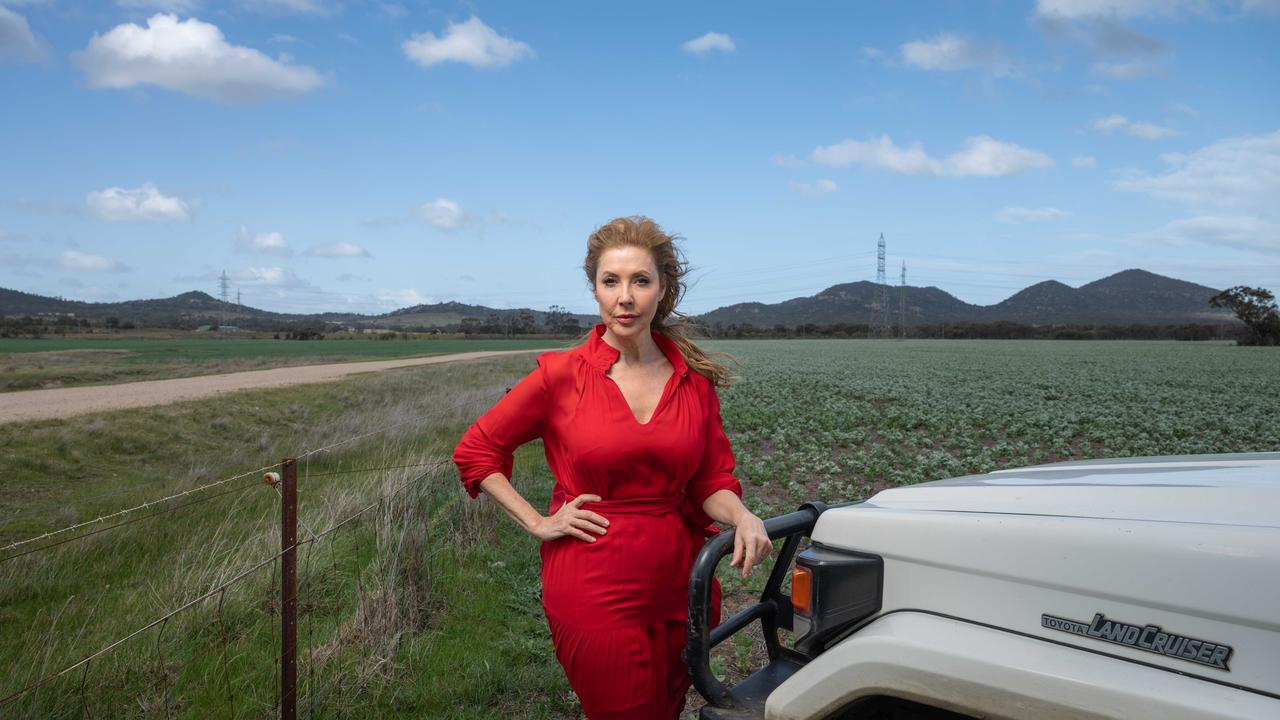
Catriona Rowntree has been one of the loudest and most consistent voices on this, and she deserves credit for it. Long before most of Geelong had heard of the proposal, she was raising exactly the question that matters most here: not "should renewables be built somewhere," but "why here, on this road, in this fire corridor."
01 / What's actually proposed
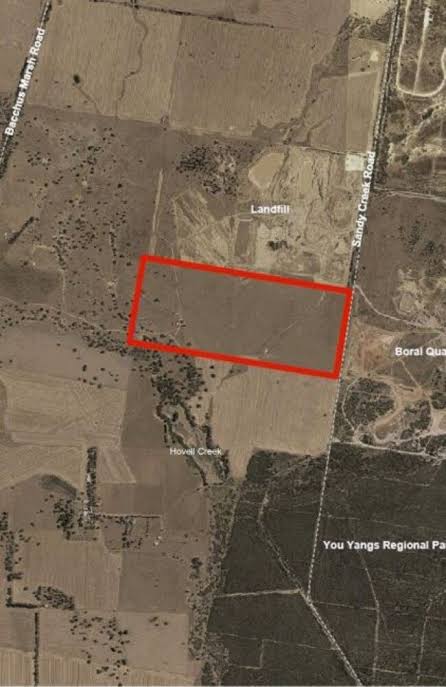
AC Energy has proposed a battery energy storage system on Sandy Creek Road at Little River, at the base of the You Yangs Regional Park — reported at roughly 350MW/700MWh in scale, on land in the order of 770 hectares. If built, it would be one of the largest facilities of its kind in Victoria. Rowntree, who lives on a neighbouring property, has said she only found out about the proposal through a report in the local paper, and that she raised it with a local councillor who was also unaware of the plans.
To be clear about where I stand: this isn't opposition to renewable energy or battery storage as technology. Rowntree herself has made the same point publicly — this is not a "not in my backyard" objection. It's a question about whether this specific site, with this specific access, is the right place for infrastructure of this scale and risk profile.
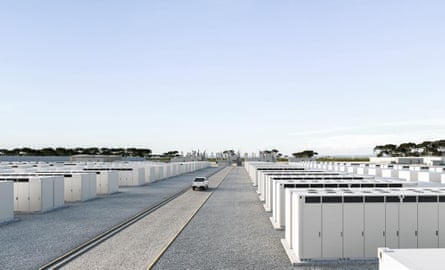
02 / The access problemWhat "one road in, one road out" actually means.
The area around the proposed site is served by a limited network of local roads, several of them unsealed, connecting the site to residents, a working quarry, farms and Little River itself. In ordinary conditions, that's a manageable rural road network. In an emergency — a grass fire, a vehicle incident, or a fault at the battery facility itself — a single constrained route becomes the only way in for emergency services and the only way out for everyone else.
Figure 01 · What a single access route means in practice
Four groups sharing one road.
Nearby homes and farms
- The only way to evacuate if conditions deteriorate
- The only way emergency services reach them if they can't leave
An operating local business
- Trucks and staff movements share the same limited road network
- A blocked road stops legitimate commercial activity, not just emergency access
Stock, machinery, livelihoods
- Fire doesn't wait for a road to reopen
- Livestock and equipment can't be moved quickly if the only route is congested or closed
CFA, ambulance, police
- One route in means no alternative if that route is blocked, damaged, or itself on fire
- A facility fire and a bushfire could compete for the same access at the same time
This is precisely the scenario fire safety guidance for grid-scale battery storage overseas has flagged as a planning risk — recommending a genuine secondary access route specifically so a fire at the facility itself can't cut off the only way in for firefighting crews.
03 / Why the fire risk isn't hypothetical
This is a genuine fire corridor, not a label attached after the fact. The 1969 fires that swept through Little River and the surrounding You Yangs country were fatal and destroyed property across the region — it remains one of the worst fire events in the area's living memory. Rowntree has pointed to that history directly, and to the area's exposure to sustained high winds, as the core of her objection to the site.
Lithium battery storage carries its own distinct fire risk profile — thermal runaway events are difficult to extinguish by conventional means and can burn for extended periods. Australia has direct experience of this: a large battery storage fire near Geelong in 2021 took investigators time to fully understand, and prompted the state's safety regulator to review compliance with electricity safety rules before testing could resume. That's not a reason battery storage can't be done safely — it's a reason access, evacuation and firefighting logistics need to be right before a facility this size is approved, not worked out afterwards.
04 / The alternative site
Rowntree has pointed to a specific, practical alternative: a disused sand quarry further along the road that's already disturbed land, rather than productive agricultural country in a fire corridor. Her point is a fair one and worth taking seriously — if a comparable site exists that avoids both the fire-corridor exposure and the single-access problem, the case for insisting on the original location weakens considerably.
A view from the ranges

Why would you put a project like this on prime farmland in a fire corridor with one road in, when a disused quarry down the road solves half the problem on its own?— based on public comments by Catriona Rowntree
05 / What should happen before approval
Three things should be non-negotiable before a project like this proceeds on a site like this: an independent assessment of the access network under fire and emergency scenarios, not just normal operating conditions; a genuinely funded second access route, not an "indicative" one left to a later approval stage; and consultation with the City of Greater Geelong and the local community that happens before decisions are made, not after residents read about it in the paper.
None of that is anti-renewables. It's the same due diligence any piece of major infrastructure — a hospital, a school, a quarry expansion — would be expected to clear before approval. Battery storage shouldn't get a lower bar because it's climate-positive in other respects. The politics of renewables shouldn't be allowed to override the practical question of whether one road is enough.